Equanimity, the Mountain Within
What is Equanimity?
The word equanimity refers to a state of being calm and balanced, especially in the midst of difficulty. In the context of mindfulness, it also carries the meaning of being impartial, non-discriminatory, or non-judging.
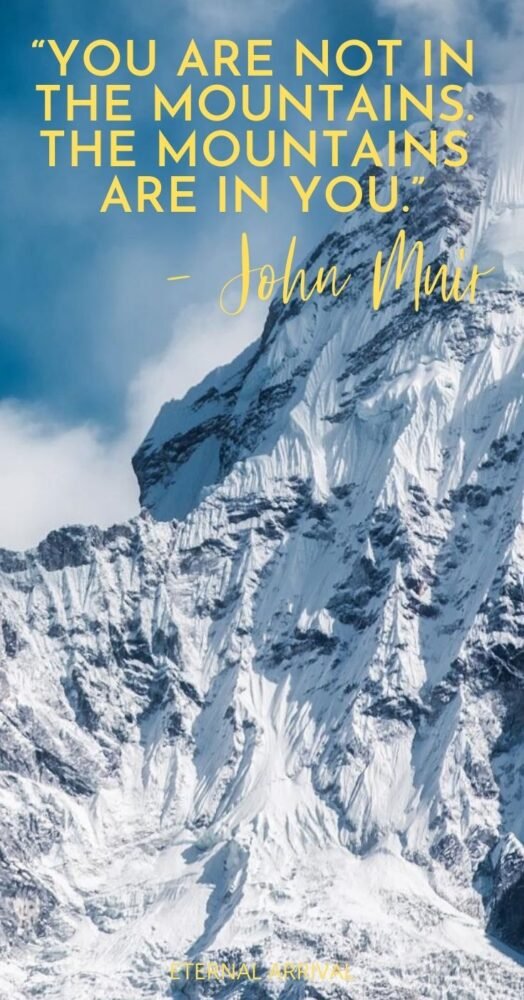
It’s translated from the Buddhist Pali term, upekkha, which literally means ‘to look over’ as in looking out and over from a high point. The metaphor here is that you may climb a mountain to look over the whole situation, your view is all encompassing, not blinded or bound by one side or the other.
Upekkha is also translated as a form of seeing that gracefully includes whatever comes into the field of vision. It is interesting to think of equanimity as a skillful and wise method of seeing rather than a passive state. It should not be confused as indifference.
| “Equanimity is not indifference or coldness. It doesn’t mean you don’t love all your children—it means you love all of your children without discrimination.” – Thich Nhat Hanh |
Equanimity describes an evenness of mind and temper that allows us to navigate the many curveballs that life throws at us. Meditation teacher Bhikkhu Bodhi described it as:
“an evenness of mind, an unshakeable freedom of mind, a state of inner equipoise that cannot be upset by gain and loss, honor and dishonor, praise and blame, pleasure and pain.”
If you are a creative, you can’t let the rollercoaster of life stop you from being creative, open, intuitive, and willing to take on new challenges and opportunities.
The more equanimity and stability you have within, the more you can hold in your field of awareness, and the more you can channel and communicate through your chosen medium.
Cultivating equanimity doesn’t mean suppressing or denying emotions. It means you can honor those emotions by being present with them and by responding from a place of inner calm and balance.
Finding your inner mountain
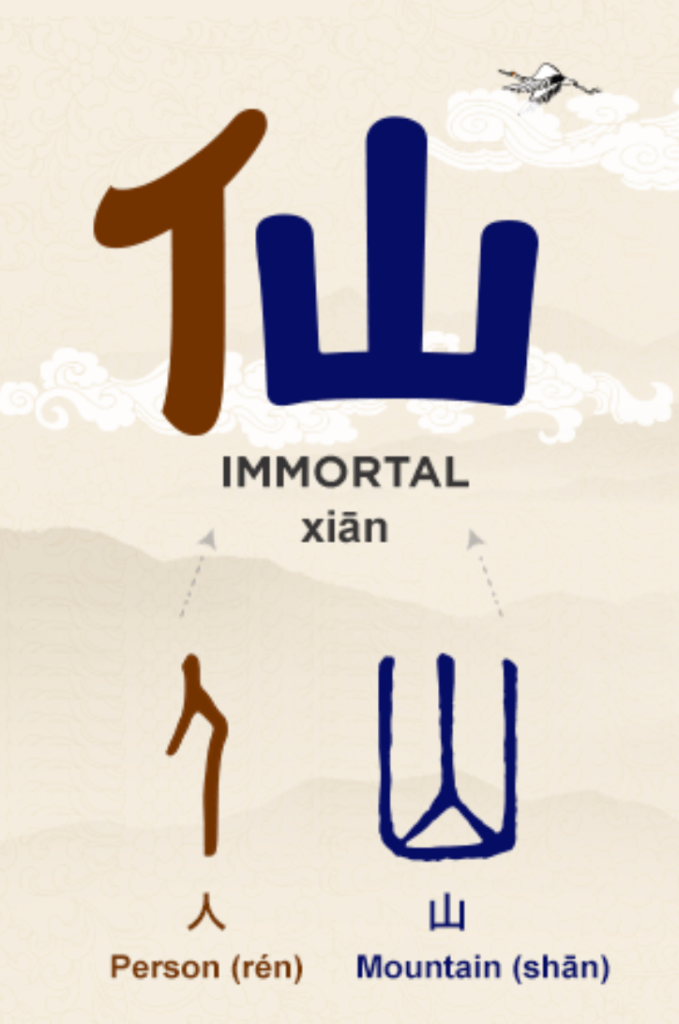
The Chinese character for “immortal” is the image of a person next to a mountain. In China, mountains are considered sacred sites that nourish the great spirits, sages, artists, and wise elders.
Ancient Chinese cosmology saw no binary division between our inner and outer worlds, between the subjective and objective realms. Thus interpreting this concept, one could say it represents a person in the mountain OR the mountain in the person.
Mindfulness teacher Sharon Salzberg describes equanimity in the image of mountain, she says,
“Sit like a mountain. Sit with a sense of strength and dignity. Be steadfast, be majestic, be natural and at ease in awareness. No matter how many winds are blowing, no matter how many clouds are swirling, no matter how many lions are prowling, be intimate with everything and sit like a mountain.”
This is an image of equanimity.
Buddhist teacher Pema Chodron advises welcoming uncertainty in the process..
“Letting there be room for not knowing is the most important thing of all. When there’s a big disappointment, we don’t know if that’s the end of the story. It may just be the beginning of a great adventure. Life is like that. We don’t know anything. We call something bad; we call it good. But really, we just don’t know.”
Equanimity and Creativity
In the creative process this is so true. Countless studies and artist biographies have shown us that embracing not-knowing, ambiguity, and uncertainty can lead to amazing breakthroughs in innovation and creative thinking, what is often called “beginner’s mind” in Zen.
With equanimity, you can maintain a balance between that amorphous realm of uncertainty and being firmly grounded on the earth making rational decisions.. like a mountain with peaks in the clouds and a strong firm, unwavering foundation on the earth, this is a place where you can harness great creative energy.
Guided Meditation (Sitting in Mountain, 17 min)

Creative Exercise “Eagle Eye Mountain Mandala”

Draw a large circle. This the base of your mountain from an aerial, cosmic view, high up in space.
- Put a point in the middle of the circle. That’s the highest peak of the mountain, from which everything is visible.
- On the circle, mark four equidistant spots representing the four directions, representing your connection to everything in the universe in all directions. It can be a dot, a line, or any shape.
- Now you are free to fill in your mountain and its surroundings with any shapes, words, patterns or textures that flow from your present consciousness, from your eagle eye perspective looking out over your mountain. You can bring in images or sensations from the mountain meditation if you wish.
This is a great exercise to help you zoom out and reconnect with a sense of calm and perspective when you are going through a tough time. Try it out and see if it can help you develop greater equanimity, from the high up perspective of an eagle looking down from the sky.
Jack Kornfield’s teaching on the equanimity of a peaceful heart is a true classic:
 The Universe in a Dewdrop